Mom and New Born: A Designer’s Practical Review
As a designer who has spent countless hours digitizing patterns and troubleshooting stitch-outs on various machines, I approach every new machine embroidery design with a critical eye. It is not just about whether the image looks cute on a screen; it is about how those digital lines translate into thread on fabric. Recently, I evaluated Mom and New Born, a piece from the Crafts category that promises high-quality cut files and smooth professional outputs. Here is my honest assessment of how this design performs in real-world applications, from small shop products to personalized client gifts.
First Impressions and Visual Personality
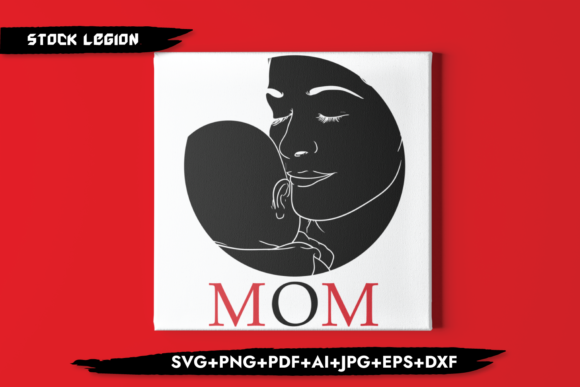
The first thing that strikes you about Mom and New Born is its emotional resonance. The layout captures a tender moment, focusing on the bond between mother and child. Visually, the design relies on clean lines and a balanced composition. For an embroidery project, this simplicity is often a strength. Complex, overly detailed illustrations can sometimes turn into a muddy mess of thread if the stitch density is not managed perfectly. This design appears to prioritize clarity, which suggests it will stitch out cleanly even for those who are still mastering their tension settings.
The mood is soft and nurturing, making it an ideal candidate for items meant to convey love and care. Whether you are creating a personalized gift for a baby shower or adding a sentimental touch to a boutique clothing line, the visual personality of this graphic fits naturally. It does not scream for attention with chaotic elements; instead, it offers a quiet elegance that appeals to modern tastes in nursery decor and family-themed apparel.
Real-World Application: The Tote Bag Test
To truly understand the viability of any digital embroidery file, I mentally place it on a specific product. Let us consider a custom canvas tote bag design. Canvas is a sturdy fabric, but it has a visible weave. When I imagine stitching Mom and New Born onto a natural-colored tote, the contrast becomes key. If the design uses solid fill stitch areas, they need to be dense enough to cover the fabric texture without pulling the material out of shape.
In this scenario, the design’s reported 300 dpi quality in the source files suggests that the edges should be crisp. For a craft business owner, this means the finished product will look professional rather than homemade in a negative sense. Customers buying a tote bag with this motif are likely looking for something they can use daily while showcasing their role as a parent. The durability of the stitch-out matters here. If the design holds up after multiple washes, it builds customer trust and encourages repeat business for your Etsy seller storefront or physical craft fair booth.
Apparel and Fabric Considerations
Moving from accessories to custom apparel, let us discuss sweatshirt embroidery. Fleece and cotton blends are popular for mom-and-me matching sets. However, these fabrics are thick and can be tricky. When applying Mom and New Born to a sweatshirt, you must consider the hoop size. The description mentions a 6x6 dimension, which is a versatile size for chest placements or sleeve accents. It is large enough to be seen but small enough to fit on most standard hoops without requiring re-hooping.
One must be cautious with stretchy fabric. If you are placing this on a thin baby onesie, the pull of the stitches can cause puckering. I always recommend using a cut-away stabilizer for garments that will be washed frequently. The design’s structure seems robust, but testing on scrap fabric is non-negotiable. Check how the thread colors interact with the fabric. Pastel threads on white fleece might get lost, whereas bold colors on dark navy could pop beautifully. This is where your judgment as a maker comes into play. You are not just stitching a file; you are curating a look.
Navigating Technical Challenges
While Mom and New Born is described as having smooth professional files, no design is immune to the quirks of embroidery machines. There are areas where you should proceed with care. If the design includes fine details or tiny lettering, these can easily break or become indistinct if the needle size is too large or the thread tension is off. I advise inspecting the zoomed-in preview of the graphics before purchasing or downloading. Look for potential "jump stitches" or areas where the path changes direction abruptly, as these can cause thread breaks.
Another consideration is curved surfaces, such as caps. Embroidering on a cap requires a different approach than flat fabric. The 6x6 size might be too wide for the front panel of a standard dad hat, so you may need to scale it down. However, scaling down reduces stitch count and detail clarity. If you plan to use this as an embroidered patch to sew on later, you have more flexibility. Patches allow you to perfect the stitch-out on a stable backing before attaching it to the final garment, reducing the risk of ruining expensive inventory.
Commercial Value and Brand Consistency
For commercial embroidery professionals and small shop product creators, consistency is king. You need designs that look the same every time they run. The claim that these cutting files have been tested at the highest quality is promising, but verification is essential. Does the applique design version align correctly? Are the trim lines accurate? These factors affect your production speed. If you spend twenty minutes trimming loose threads or fixing misaligned layers, your profit margin shrinks.
Using Mom and New Born in your portfolio can enhance your brand’s emotional appeal. It signals that you understand your customers’ desires for meaningful, family-centric items. Whether used in holiday embroidery projects for Christmas gifts or as a year-round staple for baby showers, the design adds value. It transforms a plain item into a keepsake. For design assets libraries, having reliable, emotionally resonant graphics like this allows you to create varied printable mockup presentations that attract buyers online.
Practical Designer Notes for Success
Before you commit to a full production run, follow these practical steps to ensure success with Mom and New Born:
- Test on Scrap Fabric: Always stitch a sample on the exact fabric type you intend to use. This reveals issues with puckering or thread breaks.
- Check Thread Contrast: Ensure your chosen thread colors provide enough contrast against the fabric background for the design to be legible.
- Review Stitch Density: If the design feels too stiff after stitching, the density might be too high for lightweight fabrics. Adjust your stabilizer accordingly.
- Confirm Hoop Size: Verify that the 6x6 dimensions fit comfortably within your machine’s hoop capabilities without hitting clamps.
- Inspect Small Details: Zoom in on the digital file to check for tiny elements that might not stitch out well at smaller scales.
- License Verification: Always confirm the licensing terms. Can you sell the finished product? Can you use it for commercial embroidery? Never assume; always read the included documentation.
In conclusion, Mom and New Born presents itself as a versatile and emotionally engaging option for makers. Its strength lies in its clarity and thematic relevance. By approaching it with a designer’s mindset—considering fabric, stabilizer, and end-use—you can leverage this embroidery file to create high-quality, sought-after items. Whether you are an experienced Etsy seller or a hobbyist making gifts for friends, this design offers a solid foundation for beautiful, heartfelt creations.